Can Your Old Timber Floors Be Saved?
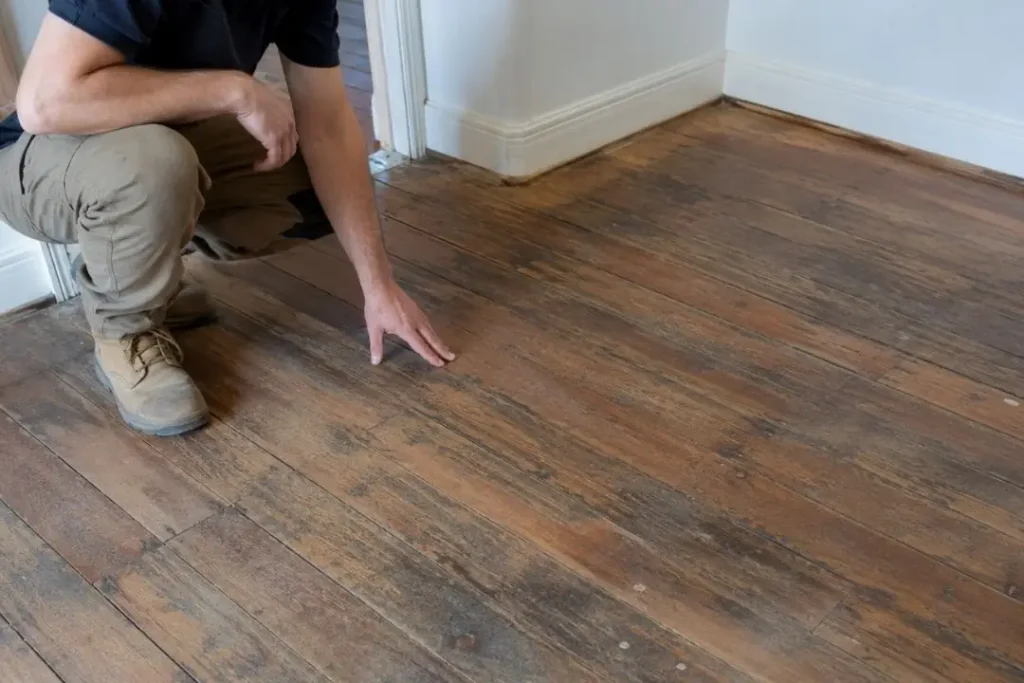
Old timber floors can look rough. Scratches, stains, dull finish, maybe a few boards that creak or feel soft underfoot. The natural reaction is to assume they’re past saving and start pricing up new flooring. But that assumption costs a lot of homeowners money they didn’t need to spend.
Restoration and replacement are genuinely different paths, and the right one depends on the actual condition of your floor, not just how it looks on the surface.
What Restoration Actually Involves
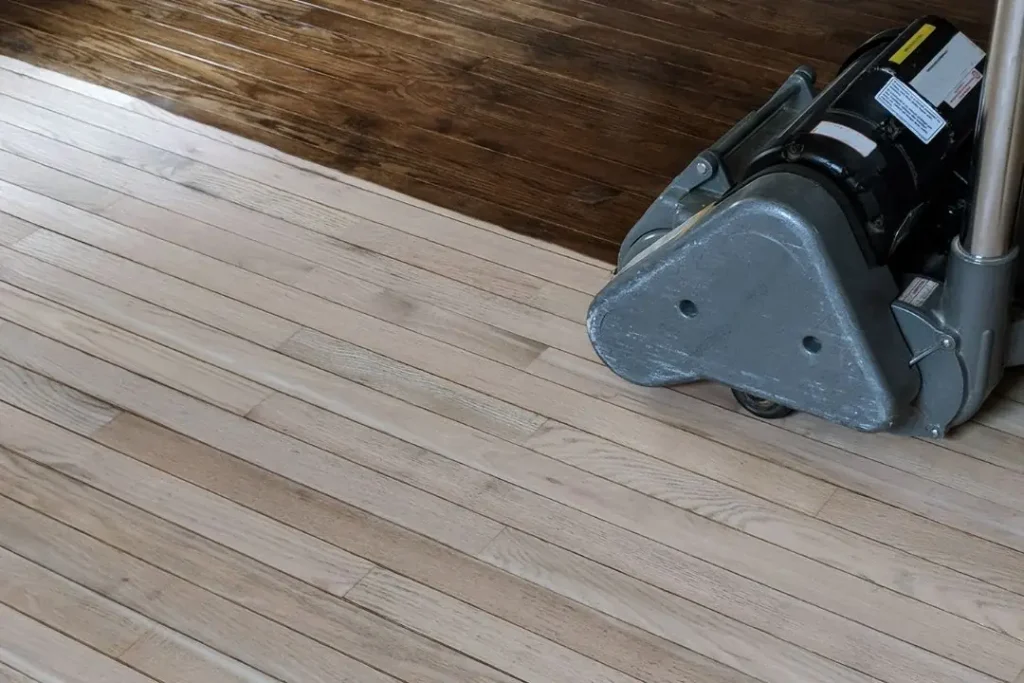
Sanding strips back the old finish and a thin layer of timber, revealing fresh wood underneath. A new coat of oil, stain or polyurethane is then applied to protect and seal the surface. The result is a floor that looks and performs like new, without removing the boards.
Most solid timber floors can be sanded multiple times over their lifespan. If your boards are structurally sound and at least 18mm thick, there’s a strong chance restoration is a viable option. A professional assessment will confirm how much timber is left to work with.
When Restoration Is the Smarter Call
Surface-level damage is almost always restorable. Scratches, scuff marks, faded finish, minor staining and general dullness all sit above the structural layer of the timber. Sanding removes that damage entirely.
Boards that have cupped slightly due to moisture changes can often be flattened during the sanding process, depending on severity. Gaps between boards can be filled. Squeaks caused by surface movement can be addressed before finishing. These are not reasons to replace a floor.
Cost is also a significant factor. Restoration is consistently cheaper than full replacement, sometimes by a wide margin, once you account for the cost of new materials, labour, removal of the old floor and disposal.
When Replacement Makes More Sense
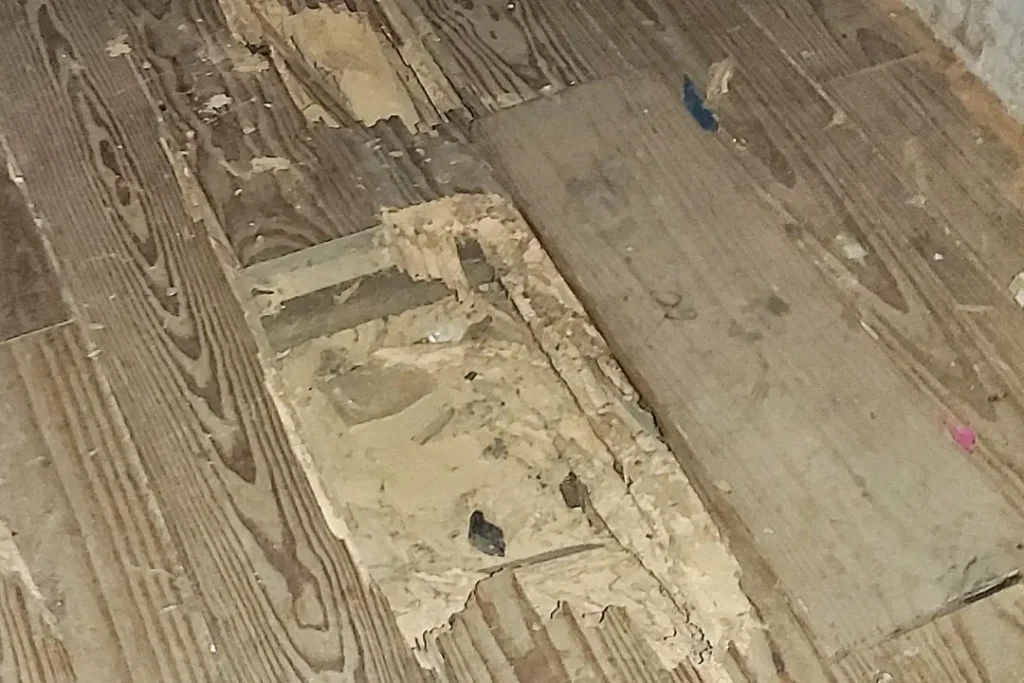
There are situations where restoration isn’t the right answer. Structural damage is the clearest one. If boards are rotting, severely warped, or have been eaten through by termites, sanding won’t fix the underlying problem.
Termite damage in particular needs careful assessment. Some affected boards can be replaced individually while the rest of the floor is restored, but widespread structural damage across multiple boards changes the calculation. Knowing how to identify termite damage in timber floors before calling anyone in gives you a clearer picture of what you’re dealing with.
Floors that have already been sanded to the point where very little timber remains above the tongue and groove are another case where replacement becomes necessary. There’s simply not enough material left to sand again without compromising the board’s integrity.
What About Covering the Old Floor Instead
Some homeowners consider laying new flooring directly over existing timber rather than sanding or replacing it. This can work in limited circumstances, but it comes with trade-offs.
Adding a new layer raises the floor height, which affects door clearances, skirting boards, transitions to other rooms and any fixed cabinetry nearby. It also locks in whatever problems exist underneath, including moisture issues, movement and any damage that may worsen over time.
If the existing floor is structurally sound, covering it is often a short-term fix that creates longer-term complications. Restoration preserves the original floor and avoids those issues entirely.
The Hidden Floor Under Your Carpet
A large number of Gold Coast homes have original timber floors sitting beneath carpet that was laid decades ago. These floors are often in surprisingly good condition because the carpet protected them from foot traffic and UV exposure.
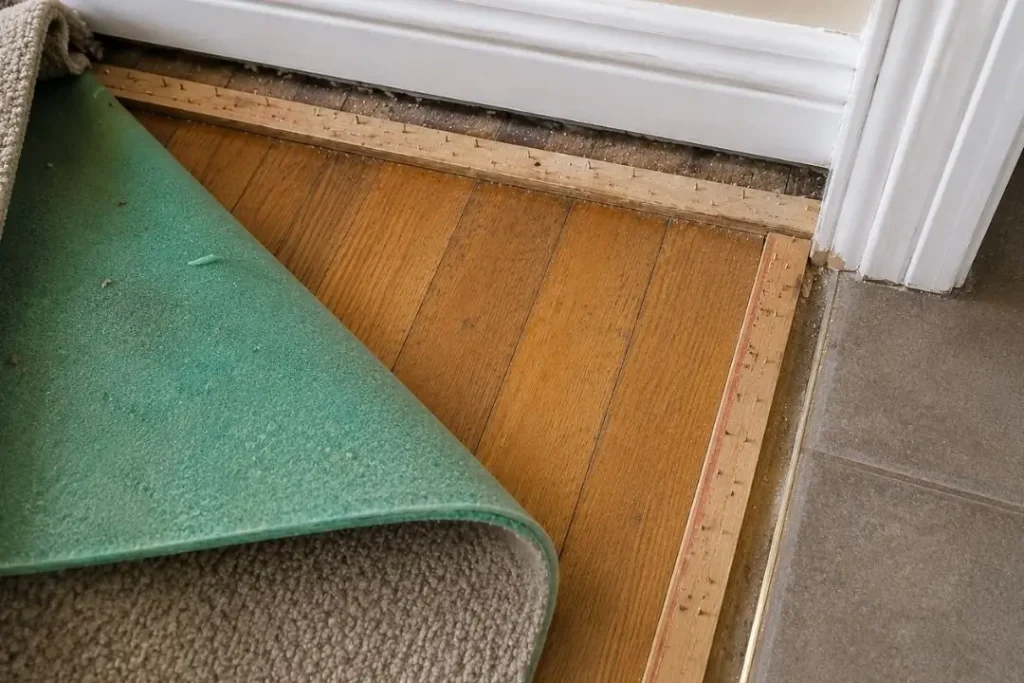
Pulling up carpet to find original timber floors hidden underneath is more common than most people expect, and the restoration potential in those cases is usually excellent. The boards haven’t been walked on directly, haven’t been exposed to sunlight, and often just need a thorough sand and finish to come back to life.
How Timber Floors Affect Your Property’s Value
Restored timber floors hold genuine appeal for buyers. Solid hardwood floors influence buyer engagement and perceived property value in ways that carpet and laminate simply don’t match. Research into how hardwood floors affect buyer interest consistently shows timber as a preferred surface in residential properties.
If you’re preparing a home for sale, restoration is often one of the highest-return investments you can make relative to cost. A freshly sanded and finished floor changes the feel of an entire room without requiring a renovation.
Making the Call: A Practical Starting Point
Walk the floor and press down on each board. Solid boards that don’t flex or feel spongy are a good sign. Check for any soft spots, discolouration that goes deeper than the surface, or boards that have significant vertical movement when you press them.
Look at the board thickness if you can access it from below or through a vent. Boards with plenty of material above the tongue are strong candidates for sanding. Thin boards or those with visible structural compromise need closer inspection before committing to either path.
When in doubt, get a professional to look at the floor before making any decisions. The assessment itself takes very little time and removes the guesswork entirely.
Get the Right Advice Before You Commit
Whether your floors need a full restoration or just a refresh, the right starting point is an honest assessment of what’s actually there. For Gold Coast floor sanding across the region, including the Scenic Rim, our team assesses each floor on its own merits and gives you a straight answer on what’s possible. We also cover floor sanding in Helensvale, Southport, and surrounding suburbs.
Call (07) 5651 0891 or get in touch online to arrange your free quote.
