
What’s Actually Under That Carpet?
A lot of older Australian homes were built with timber floorboards that were later covered with carpet. Sometimes this came with changing interior styles, while in other homes carpet was added during later renovations or used to cover worn flooring.
If you have an older timber-framed home, there may be original floorboards sitting underneath the carpet. The question is what type of timber is there, what condition it’s in, and whether it’s suitable for sanding and refinishing.
How to Tell If There’s Timber Under Your Carpet
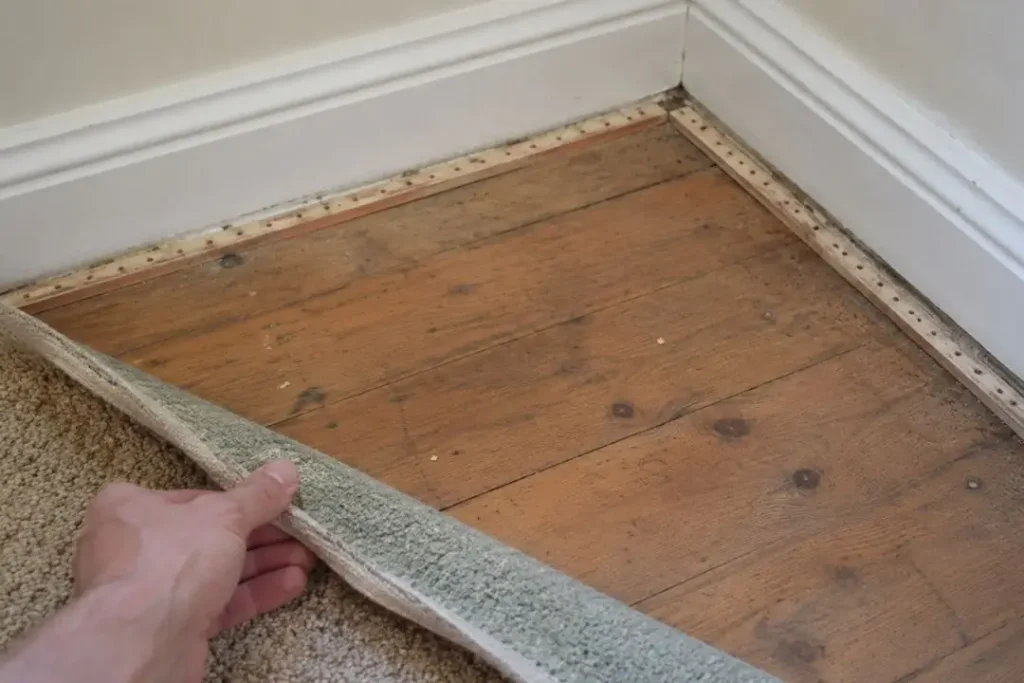
The quickest way to check is to lift a corner of the carpet in a low-traffic area, such as inside a wardrobe or along a skirting board. Peel back the carpet and underlay and look at what’s underneath.
If you see timber boards, note the width, colour and grain. Wider boards with a reddish or honey tone are often Australian hardwood species like blackbutt, tallowwood or spotted gum. Narrow boards with a pale yellow tone may be pine, which is softer and less durable.
You can also check from underneath the house if there’s a subfloor crawl space. Solid timber floors are visible from below, and you can often get a sense of the board thickness and condition without disturbing the carpet at all.
What Condition Are the Boards Likely to Be In?
Boards that have been carpeted for decades are often in better shape than you’d expect. The carpet has protected them from foot traffic, sunlight and surface scratches. In many cases, the timber underneath is structurally sound and just needs sanding and finishing to look good again.
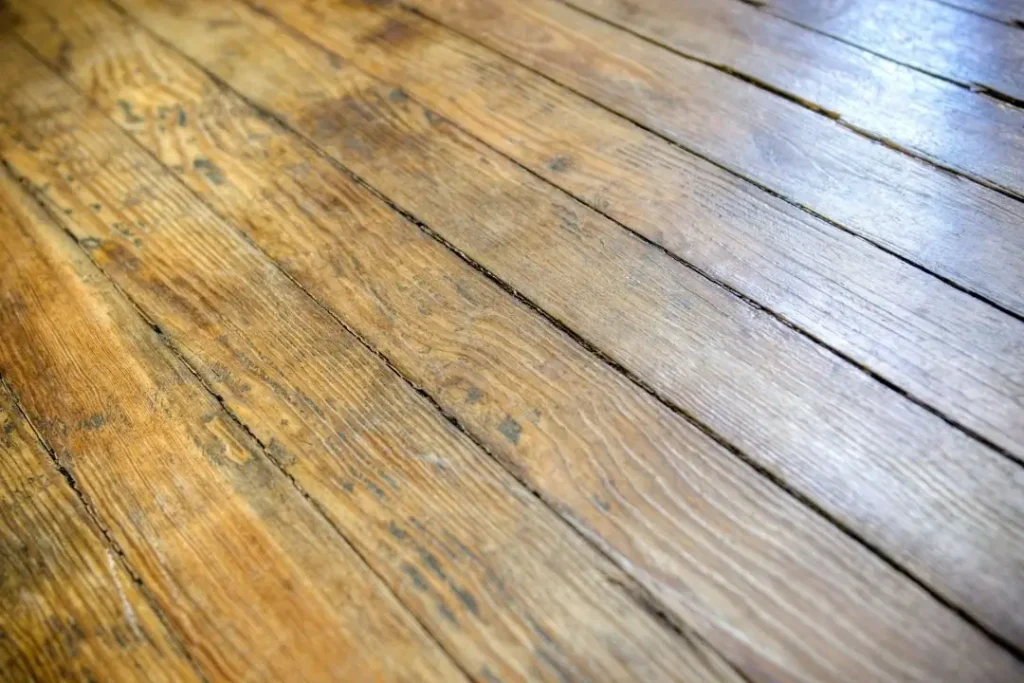
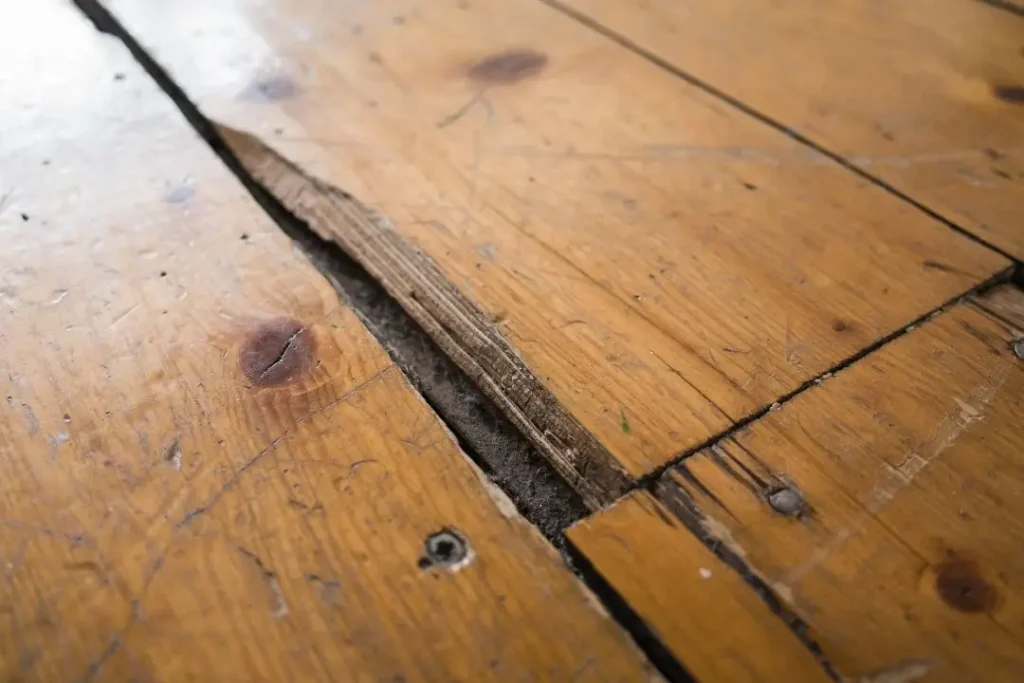
That said, there are common issues to watch for. Staining from old spills or pet urine can penetrate deep into the timber. Squeaky or bouncy boards may indicate loose fixings or subfloor movement. Boards near wet areas like bathrooms or laundries are more likely to show cupping or swelling from moisture exposure.
Surface-level issues like minor scratches, nail holes and small gaps between boards are normal and are addressed during the sanding and restoration process. Deep staining or structural damage is a different matter and may affect which timber floor restoration options are practical for your situation.
The Asbestos Risk You Need to Know About
Before you pull up carpet in a home built before 1990, asbestos is a serious consideration. Some older carpet underlay and adhesives used during that era may contain asbestos fibres, and disturbing them without proper precautions creates a genuine health risk.
Queensland Health has issued warnings about asbestos found in recycled carpet underlay, and it’s not something to take lightly. If you’re unsure about the age of your underlay or adhesive, have it tested by a licensed asbestos assessor before any removal work begins.
A professional floor sanding company will ask about this before starting work. If asbestos is present, it needs to be removed by a licensed contractor before sanding can proceed.
Identifying What Species of Timber You Have
Knowing your timber species matters because it affects how the floor sands, what finish suits it best and how durable the final result will be. Australian hardwoods vary considerably in hardness, grain pattern and colour.
Blackbutt and spotted gum are among the harder, more durable species commonly found in Queensland homes. Tallowwood has a distinctive interlocked grain that can make sanding more demanding. Pine floors, while softer, can still be restored well with the right approach, though they show wear more quickly than hardwood.
If you’re not sure what species you have, a flooring professional can usually identify it from a small exposed section. Researching common Australian hardwood species can also help you understand what you’re looking at before getting a quote.
What the Removal Process Actually Involves
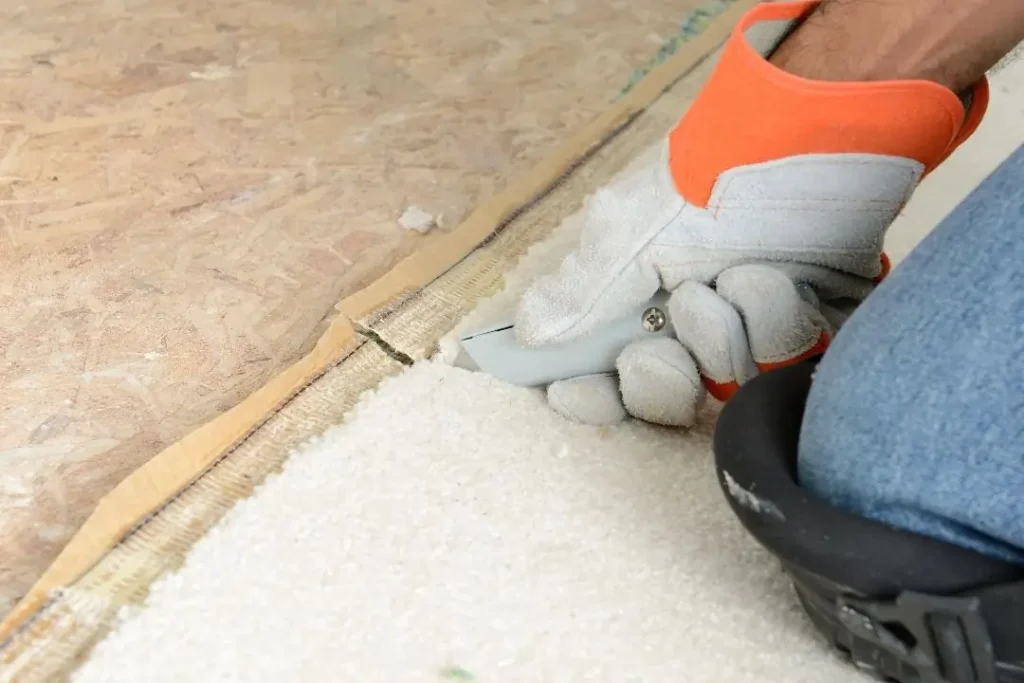
Carpet removal is straightforward in most cases. The carpet is cut into manageable strips, rolled up and removed. The underlay comes up next, followed by the gripper rods around the perimeter of the room.
Staples and tack strips left in the boards need to be pulled out carefully to avoid gouging the timber. Any remaining adhesive residue from older underlay may need to be scraped or sanded back before the main sanding process begins.
Once the floor is clear, a professional will assess the boards for any that need re-nailing, replacing or spot repairs before sanding starts. Skipping this step leads to squeaks and movement after the finish goes down.
Realistic Expectations for the Finished Result
Original timber floors that have been hidden under carpet for years rarely look perfect straight away. There will be nail holes, minor gaps, colour variation between boards and possibly some staining that doesn’t fully sand out.
These characteristics are part of what makes an original timber floor look the way it does. Most homeowners find the result far more appealing than they expected, even with minor imperfections. A quality sand and finish brings out the natural grain and colour in a way that’s difficult to replicate with new flooring products.
If the boards are in poor condition in isolated areas, a flooring professional can often replace individual boards to match rather than replacing the entire floor. This keeps costs down while maintaining the character of the original floor.
Before You Book Anyone In
Lift a corner of the carpet yourself first so you know what you’re dealing with. Take a photo of the exposed timber and note any obvious damage, staining or movement in the boards.
Check the age of your home and consider whether asbestos testing is needed before any removal work starts. This is a step that protects everyone on site and should not be skipped in older properties.
Get a quote from a professional who will inspect the floor in person rather than pricing over the phone. The condition of the boards, the species, the size of the area and the finish you want all affect the final cost, and a proper assessment avoids surprises.
Ready to See What’s Under Your Carpet?
If you’re on the Gold Coast or in the Scenic Rim and you think there might be original timber hiding under your carpet, we can take a look and give you an honest assessment. For floor sanding Gold Coast homeowners can rely on, we cover the full region including the northern suburbs, hinterland and coastal areas.
We also service the northern end of the coast, including floor sanding in Currumbin and surrounding areas. Whether you need a full restoration or just want to know what you’ve got, we’re happy to come out and have a look.
Call (07) 5651 0891 or get in touch online to arrange your free quote.
